
Insights

How to Handle Calls Like a Professional

How to Handle Calls Like a Professional

Calls would always be part of a virtual assistant’s routine, regardless of whether his or her tasks are centered on customer service or otherwise. A remote worker, given the long distance from his or her client, has to make calls to coordinate tasks, share ideas, ask questions, and make clarifications, whenever necessary.

Nonetheless, not all can make calls properly. There are some, who are still having a hard time making sure they sound professional when communicating via call. This could be a hindrance to maintaining seamless relations between the virtual assistant and his or her co-workers. It is not always efficient to settle with e-mails and personal messages.

If you are among those, who have to ring a person from time to time, it is imperative you are aware of how a call should be done professionally. There are simple ways to do so, such as the following:

Answer promptly. It is highly unprofessional if you let calls ring continuously without picking them up right away or sending them to voicemail. This actually takes much of the caller’s time.

If you are not available, a voicemail is a good hint. Moreover, if you can pick it up and inform you may have a conversation at a later time, it would be much more helpful.

Always start with a professional greeting. You should always keep in mind that the person at the end of the line may not always be the one you are expecting. This is regardless of having a caller ID system in place. 

It is always best to start with a polite greeting, such as “Good morning” or “Good day.” To make it sound more professional, you may also add your name as an introduction upon picking up the call.

Speak clearly and slowly. You need to avoid speaking at a faster pace to avoid misunderstanding and confusion. It is best to stay calm while talking to make sure you are conveying your thoughts properly. 

If you have a certain accent that may be difficult for some to comprehend, the more you should follow this.

Additionally, if you are used to adding fillers, like “uh,” “uhm,” and “like,” you should practice avoiding those words while making calls. The more straightforward your sentences are, the better the conversation would be.

Smile while on a call. If you want to provide warmth to the person you are talking to, it is best to smile while on a call. This would give your voice a friendly tone. Regardless of the purpose of the call, you will get off on the right foot.

Make sure to call back, if promised. Being professional means you stand by your word. If you have informed the person that you will call back, then you should do so. Should you have specified a fixed date and time, then you should not be earlier or later than the schedule.

If you cannot make it, it is best to leave a message and request for another convenient time to continue your call.

Avoid putting the call on speaker. Putting your call on speaker would give an impression that you are not making the conversation private. This may make the person you are talking to uncomfortable, especially if the topic being discussed is sensitive and critical.

Speaker may be set if you have notified beforehand and it could be effective if you are having a call with a group of people.

Follow the transfer protocol properly. A reason to transfer the call is necessary so that the person would be aware that his or her concern is best addressed by another member of the organization.

Moreover, if a transfer would be done, you should also be certain that the person to pick up the call is available. 

With the given tips above for better handling of calls at work, you would find it easier to coordinate with the members of the organization, partners, and even clients. Maintaining good communication is pivotal in remote work, and this covers making a call now and then. Some matters are best conferred about through calls instead of written messages. Hence, making sure this communication means is done advantageously is synonymous to attaining work efficiency.
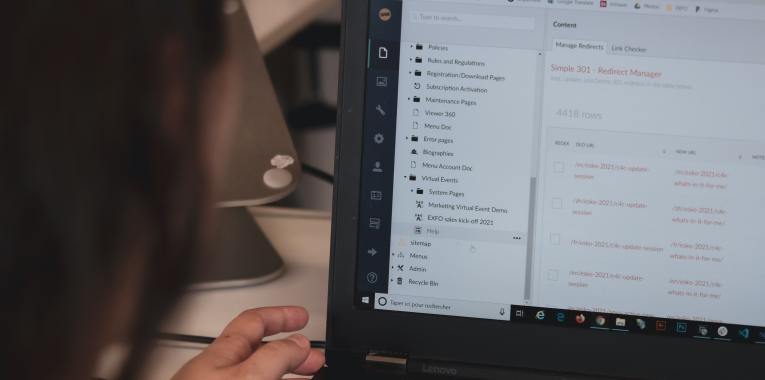

Five Simple Ways to Manage Documents More Effectively

Five Simple Ways to Manage Documents More Effectively

Ensuring your documents are organized properly is making sure that you would not have any problem taking out references from time to time. Be reminded that files, either paper-based or cloud-based, are imperative during operations round the clock. If everything is cluttered, you would likely waste a lot of time simply by finding a reference for your task.

Did you know that according to a study, a worker adds around 50 percent to their job’s total time just by simply searching for a document?

This is why as a virtual assistant, document management is one crucial skill you should concentrate on if you want to carry out your work more smoothly, resulting in boosted productivity. 

Fortunately, there are simple ways to manage your files more effectively, such as the following:

Create a single storage for all your files. Whether you are managing your files or your client’s, it is always best to store the documents in one place. For instance, a shared drive where you and your co-workers can access. This would save you a lot of time in finding any file since clutter has been cut short.

Saving some files in your desktop and the rest in an online storage may cause issues in the long run. For instance, being outdoors means that you would find it difficult to obtain your desktop files if you are just carrying a mobile phone or tablet.

As a remote worker, there is nothing better than using an online shared drive since it can be accessed anywhere regardless of the gadget you use.

Name files in a descriptive manner. If you want to find files easily, its names should also be concise and comprehensive enough. Moreover, the documents should be named in a way that it is in order, whenever necessary. Dates and times should be used if there are large files to be organized. 

Make sure to create sub-folders. You should not store all documents without creating folders for files with similar categories. For instance, documents for ‘suppliers’ should have a separate folder from those for ‘partners.’ Moreover, under the ‘suppliers’ folder, you should also create a dedicated folder for every supplier you are working with. This goes the same for the ‘partners’ folder.

Sub-folders would not only organize your files but keep you from looking all throughout your storage for a single document every time. 

Set permissions to your storage. If you are working in a team, it is best to limit the access of every member based on the activities he or she is assigned to work on. By doing so, you would also be able to keep them from scouring through folders that they do not have permission to look into. Most importantly, this will save them time and keep them from unintentionally disrupting the organization of files you have already set, such as adding or deleting files unnecessarily.

Delete unnecessary files. Over time, old files would need to be disposed of. Otherwise, these would eat much of the storage space and add to the clutter. Take note that an organization, either big or small, would definitely pile up files if the storage is not cleaned up regularly.

It is best to schedule periodic scanning of outdated files, which can be deleted. This will not simply organize your storage but keep the team members from accessing corrupted documents.

In a remote workplace, accessing documents is a constant activity. Document management can either speed up or slow down the workflow in a company. Hence, without proper management of files, you will not simply hamper your own productivity but affect your team members’ adeptness, as well. Always remember that access to documents is not enough. There should be a system in place that would turn this access into a key to everyone’s efficiency.

Why Positive Attitude at Work Is Crucial

Why Positive Attitude at Work Is Crucial

Have you ever felt that you are often in a sulky mood these days? Do you think that oftentimes, you tend to forget your responsibilities at work? Have you ever thought that there is a relationship between your current mood and how you perform at work? Most likely, the answer is yes.

As a forthright explanation to your queries, there are various studies, which have proven that one’s attitude is correlational with your productivity and efficiency in your job.

A study led by Labour Economics’ researchers found out that there is a link between employees’ mindset in the workplace and the sales they produce. The sample is composed of thousands of employees in a US-based bank’s 193 branches. According to their analysis, more financial products have been sold whenever workers’ attitude leans on positivity, resulting in the bank’s increased income.

From a different perspective, one’s disposition at work is not all about the company’s benefit. There are also perks an employee could reap by maintaining a positive attitude in the workplace:

Decreased stress. Stress is a major adversary whenever working. There is no denying that you cannot avoid it regardless of your job. However, a positive attitude could help you handle your day-to-day work more effectively. Why? Being anxious amid problems would not get you anywhere. On the other hand, if you are composed, you can find solutions more easily. Hence, you will decrease your stress level. The more you sustain positivity, the more you can eliminate stress in any form.

Nurtured respect. Having a positive attitude is equivalent to avoiding conflict with your team members, which includes gossip. By ensuring that spreading rumors is cut off all at once, which you may initiate to do so, you can keep respect in the organization.

Remember, you are all professionals. Maintaining the gap between personal life and work should always be in your mind, as well. Instead of spending time talking about someone else’s life, it is best to share ideas and thoughts on bettering one’s work.

Higher self-confidence. If you have a positive attitude, it would be much easier for you to motivate yourself in doing tasks, which are not simply your usual activities but new ones, as well. This implies you would be a risk-taker in response to developing your skills.

Being positive ensures that you would not hold back yourself to challenges. Furthermore, you will not be afraid to fail since the positive mindset in you reminds you that failures happen and you can just try again.

Better leadership. A positive attitude is a must if you are leading a team in your organization. Keep in mind that if you send a bad message to your team members while working, such as lack of encouragement, poor judgment, and hopelessness in stressful situations, your work will surely fail. This is despite having the most proficient co-workers you can find.

If you radiate the feeling of being positive in any situation, your team members would certainly mirror this. Should you show them that failure is only a setback and a step to success, they will not be intimidated by the possibility of making errors. Instead, they will face the challenge and work relentlessly until the team’s objective is achieved.

Healthier body. Negative thoughts can keep your body unhealthy given it may cause heart failure in the long run. Several studies have proven that cardiovascular problems are triggered by negative constructs. Moreover, if you keep a positive attitude, protecting your heart will be much easier, which can be seen as equivalent to a healthier you.

Additionally, Psychological stress and the human immune system: a meta-analytic study of 30 years of inquiry stated that being under prolonged stress could impact your immune system negatively. As a solution, practicing positive thinking could help you control your immunity. Remember, you need an all-functioning immune system to keep you from various diseases.

Having a healthier body has a relation to your job performance. Evidently, if your body fails, you will either miss reporting to the office for the day or not be able to work long-term.

The aforementioned perks of having a positive attitude show that having a negative mindset has grave consequences. It is not centered on your workplace efficiency, but it can impact your life generally.

Circumstances warranting negative feelings cannot be avoided, but you should remember that you are in control. You can turn these negative situations around by considering them as opportunities for growth.

How to Have a Proactive Mindset as a Remote Worker

How to Have a Proactive Mindset as a Remote Worker

Working effectively as a remote worker is not all about having the skills and experience. You also need to have that proactive mindset to maintain your good performance. There are virtual assistants, who have a lot of potential when it comes to delivering great work, but fail to do so given they are not driven enough. They are held back by their lack of a proactive mindset.

In order to avoid the aforementioned situation, you also have to consider conditioning yourself as a proactive remote worker. You cannot always rely on external factors to keep you motivated to do well at work, such as your team members, your organization, or your personal condition.

To help you have a proactive mindset, you may try carrying out the following:

Do not dwell on your past mistakes. If you made errors at work, do not dwell on them. Otherwise, you would not be able to better yourself. Consider the fact that all make mistakes, especially if new to the tasks. What is more important is to consider what lies ahead.

By accepting that you may err from time to time, your thinking would not be constrained and you can prevent feeling demotivated. You will be more willing to learn and take on challenges, which are characteristics that would make you a proactive remote worker.

Learn the power of prioritizing. Know that you cannot do every task provided to you. If you want to make the most out of having initiative, you should create a priority list. By making sure you are focusing on more important tasks, you would be able to avoid time wastage and missed deadlines.

Identifying the priority level of your activities will help you schedule your day-to-day work more effectively. You can assign a specific timeframe for each task and even your due date for it (which is different from the actual one). This would help ensure to set aside a time gap, which will allow you to review your work and edit it should there be problems.

Be prompt in communication. You would never look professional or proactive if you do not practice responding promptly when communicating. This is regardless of the platform you use (e-mail, message, or call).

For e-mail or message, regardless of having to check references before sending a reply, it is best to notify the person that you will be sending feedback by a certain time.

If you fail to respond to messages, being proactive means you also have to be willing to apologize. This may happen, particularly if you are caught up with lots of appointments.

Alongside being prompt, you will be proactive if you also consider the way you compose your response. Double check if you have addressed all concerns and if an attachment is necessary, make sure it is already included.

In terms of calls, it is always best to pick up to give an indication that you are always ready to offer any help to your bosses, team members, or customers. Be straightforward whenever speaking via call. If you need to call back, inform them about it right away and provide a specific time when you will ring them again. If you still need to verify some things before giving them concise responses, you also have to provide this information.

Be open to feedback. Having a proactive mindset also means you are willing to find out what your co-workers think about your performance at work. If they provide you reviews, make sure to welcome them. On the other hand, should they specify matters for improvement given your declining productivity and efficiency, you should take note of it. Be reminded that their insights are your means of targeting your weak points.

Know that the feedback given to you should not be taken personally. You also have to keep in mind that your performance is not about you solely since it can affect the entire organization.

Maintain a positive attitude. Being proactive also means that you are always willing to work harmoniously with everyone. You should always be approachable in times of need. Moreover, regardless of being in a situation full of tension, you should always try hard to keep your cool and be thoughtful of others.

The way you work with others can actually weigh down your skills. No matter how adept are, if you fail to get along with the people around you, collaboration would fail miserably. 

You will win more if you become proactive. This is not only in terms of becoming a better remote worker, but being someone that your co-workers can rely on. It is not a swift process, but as long as you practice it, you will definitely achieve your goal.

Simple Ways to Make Your Mondays Better

Simple Ways to Make Your Mondays Better

Monday would always be a day that most people dread. After the weekend of respite, you would feel the need to extend your rest but cannot do so for the first work day is coming. Monday is not at fault. It is simply the way things are. This is regardless of working in the office or at home.

However, starting your week right can be done in a better way. If you do not want your start of the week to pass poorly without even making your day at work more efficient, there are simple things for you to do:

Start with a plan. Monday is a good day to plan out the entire week. By planning, you would be able to prioritize the activities that need more attention due to urgency and importance. Furthermore, it is not always effective to just work as the tasks come. This could result in you concentrating on menial work. 

You could set a timeframe for each activity you will work on. For instance, for your current social media management project, market research may be done on Monday and Tuesday. Afterward, Wednesday could be a day to create graphics for postings, and so on.

Schedule meetings or appointments ahead. If you will be meeting with people, such as clients, suppliers, or contractors, Monday would be the right time to ensure that you would not be missing a slot on their calendars. The earlier you can coordinate with them, the better.

By doing so, you may also fill in your calendar accordingly. You may avoid conflicting schedules with your other commitments. By seeing your schedule ahead, you could manage your time more effectively throughout the week.

Focus on improvement. By treating Monday as an improvement check day, you could better yourself every week. Simply review how the last week had been and you would be able to do this.

You can check the lapses you had made previously, such as managing your time poorly, delaying a task frequently, or coordinating a concern ineffectively. Identifying these problems could keep you in check throughout the week. 

Touch base with co-workers. If you are working in teams, a touchbase meeting every Monday is a good way to start the week better. At the very least, you would have social time instead of focusing on work the whole day.

You can have a small talk about how the weekend has been. Furthermore, you may even share ideas on how you could spend the coming days more productively. 

Having a personal connection at the start of the week could be a boost to anyone, especially to those, who tend to feel less driven when working alone.

Wear positivity. If you want to feel better every Monday, then you should wear positivity. Think that if you would start your week right, you should begin with yourself. Smile as the day starts and think of affirmative thoughts. For instance, instead of fearing a big project to work on, think of how you would improve your skills by accomplishing it. 

The small ways mentioned above are your means of transforming your Monday into a friendly day. Think of it as your jumpstart to a productive week ahead and a more reliable you.